Audiobook · read by volunteers
Village Blacksmith
Henry Wadsworth Longfellow (1807–1882)
Read by Andrea L, Christina Zhu, David Barnes, Ezwa, Glen Hallstrom, Kristin Hughes (1974-2021), Ed Good, Mark F. Smith, Michael Sirois, Sean McKinley · 11 chapters · 25 min
About the book
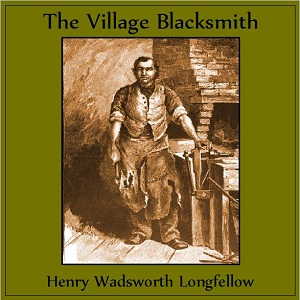
Under a spreading chestnut tree the village smithy stands, and the smith, a mighty man with large, sinewy hands and brawny arms, earns the respect of all his neighbours. Henry Wadsworth Longfellow's poem is a tribute to honest work, to family and to the quiet dignity of a man who looks the whole world in the face because he owes nothing to anyone. Its verses are among the most famous in American poetry, with a hammer-beat rhythm that suits the subject perfectly. In this collection, eleven LibriVox volunteers each record the poem in turn, as part of a weekly poetry project from October 2006. Every reading has its own pace and colour, and the whole set takes under half an hour. Plain words, strong rhythm and good feeling. Honest work, honest verse.
Introduction
Henry Wadsworth Longfellow, who lived from 1807 to 1882, was the most popular American poet of the nineteenth century. He taught at Harvard, translated Dante, and wrote long narrative poems such as Evangeline and The Song of Hiawatha, along with many shorter pieces that were learned by heart in schools across the English-speaking world. His verse is musical, accessible and full of moral feeling.
The Village Blacksmith dates from 1841 and was included in his collection Ballads and Other Poems. It is a portrait of a working man, strong and honest, whose labour is described with pride and whose family life is touched with tenderness. The poem ends with a lesson about the way each day's work shapes our lives, in imagery taken from the forge itself. For generations, children recited it in classrooms, and it became a symbol of American values of the period: hard work, independence and decency.
Today the poem is read less often, but it rewards a fresh hearing. Its rhythm echoes the hammer on the anvil, and its pictures of sparks and bellows are vivid even to listeners who have never entered a smithy.
This recording gathers the readings made for a LibriVox weekly poetry project in the first week of October 2006. Eleven readers record the same text, each in a separate chapter, and the whole thing lasts about twenty-five minutes. The differences between the readings are part of the pleasure: you can listen to one or two or go through them all. It is a pleasant way to enjoy a classic of American verse and to discover how much variety can come from a single poem.
Public domain
Henry Wadsworth Longfellow died in 1882: the work is in the public domain in Switzerland, more than 70 years after the author’s death.
The LibriVox volunteers dedicated this recording to the public domain.
Sources : LibriVox page · Files at the Internet Archive · Original text