Audiobook · read by volunteers
Typee
Herman Melville (1819–1891)
Read by Michael Scherer · 36 chapters · 11 h 42
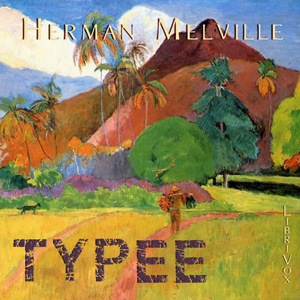
About the book
In 1842 a young sailor named Herman Melville jumped ship in the Marquesas Islands, and Typee is the story that grew out of the weeks that followed. Cut off from the world he knew, the narrator finds himself among the islanders of a remote valley, a people whose customs both fascinate and unsettle him, and whose hospitality may or may not be what it seems. Part adventure, part ethnographic curiosity, part sharp social commentary, the book moves between sun-drenched idleness and creeping dread. Melville writes with a restless, observant eye, and he is never shy about turning his irony on the supposedly civilised world that sent its missionaries and traders across the Pacific. Michael Scherer reads all thirty-six chapters in a little under twelve hours, a long, absorbing voyage for anyone who likes their adventure with a questioning edge.
Introduction
Herman Melville (1819-1891) is remembered above all for Moby-Dick, but it was his first book, Typee, published in 1846, that made his name in his own lifetime. It drew on his own experience as a young sailor in the South Pacific, and readers in America and Britain devoured it as a tale of exotic adventure. For many years it remained his best-selling work, a fact that would have surprised the author in his later, more obscure decades.
The book is also a work of argument. Melville had little patience for the way missionaries and colonial powers treated the peoples of the Pacific, and his criticism provoked a good deal of anger when the book appeared. Scholars still debate how closely the narrative follows real events and how much was shaped for the page, which is part of what keeps it interesting. It sits at the meeting point of travel writing, memoir and fiction, a form that Melville was to stretch much further in later years.
This recording is divided into thirty-six chapters and runs for about eleven and a half hours. It is read by a single LibriVox volunteer, Michael Scherer, and the story moves from comic misadventure to real unease. Today the book is worth hearing both as a gripping early work by a major American novelist and as a document of how the nineteenth century looked at itself and at the people it claimed to be improving.
Public domain
Herman Melville died in 1891: the work is in the public domain in Switzerland, more than 70 years after the author’s death.
The LibriVox volunteers dedicated this recording to the public domain.
Sources : LibriVox page · Files at the Internet Archive · Original text