Audiobook · read by volunteers
Lincoln at Cooper Union
Abraham Lincoln (1809–1865)
Read by Scott Henkel · 1 chapter · 51 min
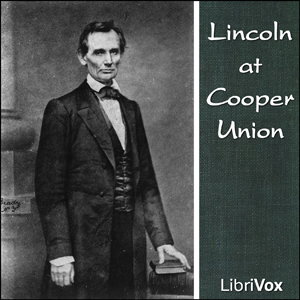
About the book
In February 1860, a tall lawyer from Illinois stood before a New York audience that knew him chiefly as the man who had debated Stephen Douglas. He set out, step by step and with legal precision, what the founders of the nation had truly intended about slavery in the territories. The speech was printed in the newspapers and as a pamphlet, and it travelled far beyond the hall. The speech at Cooper Union was careful, historical and unflinching, and it changed the way many people saw its speaker. Within months he would be his party’s candidate for president. This brief recording, of less than an hour, lets you hear the address that helped turn a country lawyer into a national figure, and a fine example of political argument built on evidence and clear reasoning.
Introduction
Abraham Lincoln, who lived from 1809 to 1865, gave this address at the Cooper Union in New York City on 27 February 1860. At that time Lincoln was considered by many to be just a country lawyer. After he gave the speech, he soon became his party’s nominee for president, and in the autumn he was elected. Few speeches in American political history have had such a direct effect on their speaker’s career.
The address deals with a question that dominated the politics of the period: what did the men who wrote the Constitution intend regarding slavery in the territories of the United States, and what authority did the federal government have to regulate it? Lincoln builds his answer through a close study of the record, going through the votes and opinions of the founding generation. He then turns to the political situation of his own day, answers his critics, and closes with an appeal that has often been quoted.
The recording is a single reading of the whole speech and lasts about fifty-five minutes. It requires some concentration, because the argument is detailed and Lincoln lays it out step by step, but it is also clear, dignified and logical.
LibriVox volunteers recorded it as part of their effort to make public-domain texts available to everyone. For anyone interested in American history, in the road to the Civil War or in the art of persuasion, it is an essential document. It also shows the care that Lincoln gave to preparing his words, and why they carried such weight with the audience that heard them.
Public domain
Abraham Lincoln died in 1865: the work is in the public domain in Switzerland, more than 70 years after the author’s death.
The LibriVox volunteers dedicated this recording to the public domain.
Sources : LibriVox page · Files at the Internet Archive · Original text